Jan 16, 2026
Why Brands Like Aera Café Are Changing How India Thinks About Coffee
Coffee Has Moved Beyond the Cup
For a long time, coffee in India was consumed out of necessity. It helped people wake up, stay alert, or power through long workdays. The experience rarely mattered. Taste was secondary to convenience, and convenience often meant compromise.
Today, that narrative is shifting.
Coffee has become personal. It reflects lifestyle choices, work patterns, social identity, and even design sensibilities. This evolution has created space for a new generation of coffee brands—brands like Aera Café, which approach coffee as an experience rather than a utility.
The Indian Coffee Consumer Is Evolving
India’s coffee drinkers today are different from those of a decade ago. They are younger, more informed, and more demanding. They expect products to align with their pace of life, not the other way around.
The modern consumer wants:
Convenience without loss of quality
Familiar flavours with refined execution
Products that feel intentional and well-designed
Brands that fit seamlessly into daily routines
This mindset has driven growth in categories once considered niche, including ready-to-drink bottled coffee.

Ready-to-Drink Coffee: A Category Finding Its Moment
RTD coffee exists because traditional formats fail to serve certain moments. Brewing coffee takes time. Café visits require planning. Instant coffee often lacks depth.
Bottled coffee fills the gap between effort and enjoyment. It delivers a finished product, designed to be consumed immediately, without preparation or compromise.
Brands like Aera Café understand that this is not about replacing cafés—it is about expanding when and where coffee can be enjoyed.
Aera Café’s Understated Entry
Unlike brands that announce themselves loudly, Aera Café has entered the market quietly. Its branding avoids exaggeration. Its product design avoids clutter. Its messaging avoids over-promising.
From an observer’s perspective, this restraint feels deliberate.
The brand seems focused on earning trust through consistency rather than attention through volume.
Packaging as an Extension of Experience
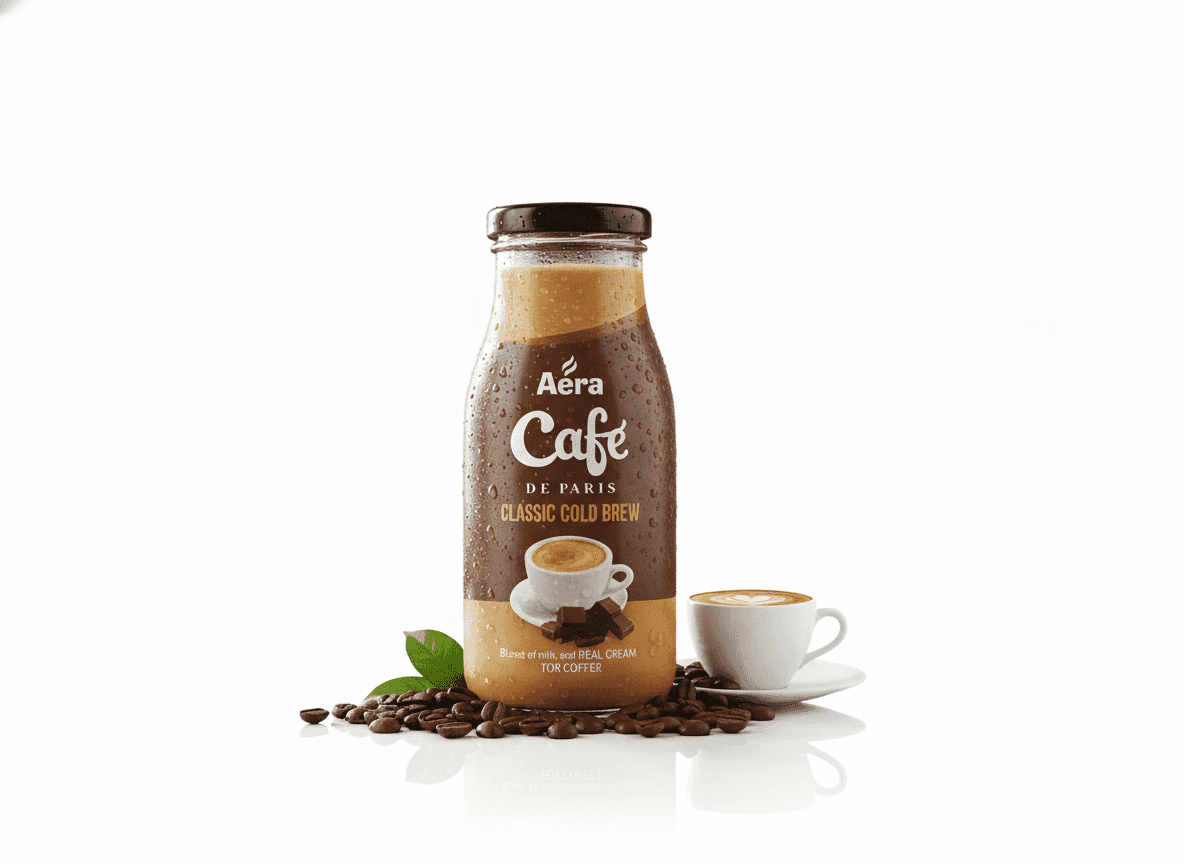
In the premium beverage space, packaging is more than a container—it is part of the product. Aera Café’s use of glass bottles reflects this understanding.
Glass bottles:
Enhance perceived quality
Preserve flavour and freshness
Align with sustainability expectations
Encourage mindful consumption
This choice positions Aera Café closer to international beverage brands than conventional packaged drinks.
Visual Identity and Modern Taste
Aera Café’s visual identity leans minimal and modern. There is a noticeable absence of aggressive colours, loud typography, or gimmicky graphics.
This aesthetic aligns well with a generation that values subtlety and design clarity. The brand does not demand attention—it invites it.
Flavours Built Around Familiarity
Rather than chasing novelty, Aera Café focuses on flavours that consumers already know and enjoy. Mocha, classic cold coffee, and nut-forward options reflect popular café choices.
The emphasis appears to be on balance—smooth textures, controlled sweetness, and consistent flavour profiles. These are drinks designed to be revisited, not just tried once.
Consistency as a Strategy
In beverage consumption, habit matters more than excitement. People return to products they trust.
Aera Café’s strategy seems built around consistency:
Consistent taste
Consistent packaging
Consistent experience
This approach may not generate immediate hype, but it builds long-term loyalty.
Coffee as a Lifestyle Companion
Aera Café does not position coffee as a luxury or an occasional indulgence. Instead, it frames coffee as a companion—present during work sessions, study breaks, travel, and moments of pause.
This subtle emotional positioning aligns with how modern consumers actually use coffee in their daily lives.
Distribution That Reflects Real Behavior
The way people buy beverages has changed. Quick-commerce platforms and online marketplaces now play a central role in discovery and consumption.
Aera Café’s alignment with these channels indicates an understanding of impulse behaviour. When the desire for coffee arises, brands that are immediately accessible often win.

The Influence of Quick Commerce
Quick commerce has compressed decision-making. Consumers no longer browse—they choose quickly.
RTD coffee fits naturally into this environment. It requires no explanation and no preparation. Aera Café benefits from this shift by offering a ready solution to an immediate need.
Sustainability Without Preaching
Sustainability has become a quiet expectation rather than a headline feature. Consumers notice packaging choices even when brands do not highlight them explicitly.
Aera Café’s use of glass bottles subtly communicates responsibility without relying on heavy messaging. This understated approach resonates with audiences wary of performative sustainability.
Building a Brand in a Saturated Market
India’s beverage market is competitive, with new brands launching frequently. What separates those that endure from those that fade is often clarity of identity.
Aera Café’s identity appears rooted in:
Product quality
Design restraint
Lifestyle alignment
Long-term thinking
These foundations tend to support sustainable growth.
Coffee Culture Beyond Cafés
One of the most significant shifts in Indian coffee culture is the separation of coffee from physical cafés. Coffee is now consumed in bedrooms, hostels, offices, and public spaces.
RTD coffee enables this freedom. Aera Café participates in this cultural shift without positioning itself in opposition to cafés.
Growth Without Noise
Not every brand needs to be loud. Some grow through quiet consistency, repeat purchases, and word-of-mouth.
From an external perspective, Aera Café appears to be following this path—prioritising substance over spectacle.
The Larger Trend at Play
India’s coffee consumption continues to rise, driven by urbanisation, lifestyle changes, and exposure to global food culture.
RTD coffee brands that establish trust early are likely to benefit as the category matures. Aera Café seems positioned to grow alongside this evolution.
Final Editorial Perspective
Aera Café represents a shift in how coffee is experienced in India—not as a ritual confined to cafés or kitchens, but as a flexible, everyday companion.
Its strength lies not in reinvention, but in adaptation. By understanding modern routines and respecting consumer intelligence, Aera Café offers a glimpse into the future of Indian coffee culture.